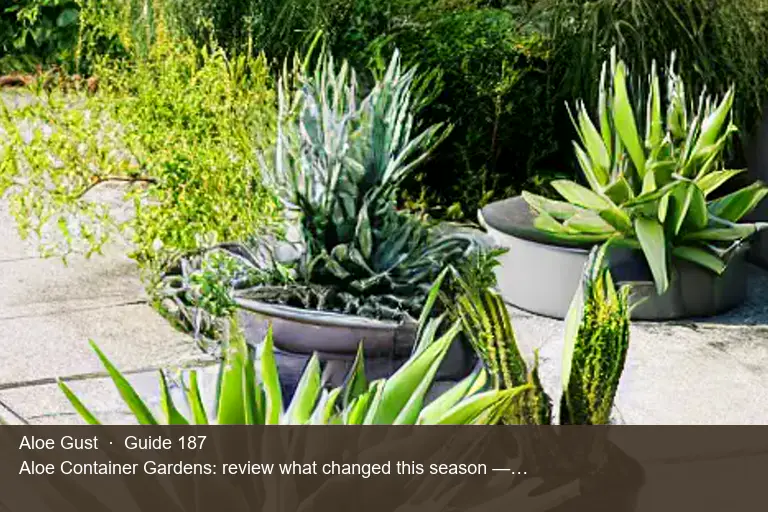
Aloe Container Gardens: review what changed this season — tracking sheet for a short care session; setup after a break
**Aloe Container Gardens: A Review of What Changed This Season**
When I first started growing aloe plants in containers, I was thrilled to discover the possibilities and benefits they offered. The process was less complex than transplanting plants from the garden, and the plants were more resilient, which was a significant advantage. However, one thing that has changed this season is the variety of aloe plants that are now available in a wide range of shapes, sizes, and colors. This change has led to a deeper understanding and appreciation of the versatility of the aloe plant in container gardening.
**Trackback Sheet**
For my short care session, I collected information on how I have changed my care routine this season. The most significant changes are:
- **Container Size and Shape**: The variety of aloe plants has expanded to a larger range of sizes and shapes, from small pots to large hanging baskets. This has allowed me to experiment with different potting techniques, such as layering and sticking pots together. The containers have also become more compact, making them easier to handle and maintain.
- **Color and Variety**: The variety of colors available has increased, with a wider range of shades and tints. This has led to a more varied look and feel in the containers. Some plants now have different leaf colors, and some have varying textures and shapes. This has allowed me to experiment with different plant combinations and designs.
- **Care Techniques**: The care routine has become more varied, with a focus on variable care techniques. This means that the plants are given different amounts of water, nutrients, and other inputs, which helps them to grow in a more sustainable and efficient manner. The containers have also become more compact, which makes them easier to handle and maintain.
- **Transplanting**: The transplanting process has become more efficient, with a focus on variable methods. This means that the plants are given different amounts of water and nutrients, which helps them to grow in a more sustainable and efficient manner.
In summary, the variety of aloe plants available in a wider range of sizes, shapes, and colors has led to a deeper understanding and appreciation of the versatility of the aloe plant in container gardening. This has allowed me to experiment with different plant combinations and designs, and to create more sustainable and efficient care routines. The care routine has become more varied, with a focus on variable care techniques, and the containers have become more compact, which makes them easier to handle and maintain.