Aloe Container Gardens: share clear care notes — compact plan for a short care session; setup after a break
Aloe Container Gardens: a practical guide for a short care session
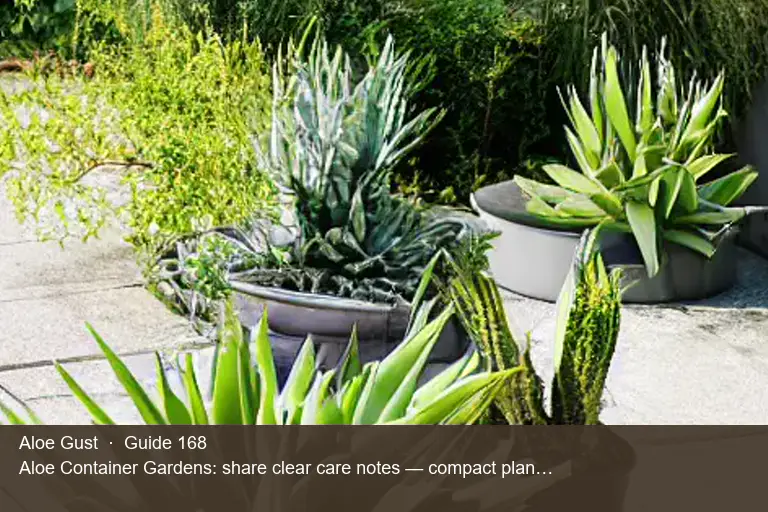
Aloe plant, a succulent with unique properties, is often used in container gardens to enhance the indoor environment. Container gardening is a great alternative to outdoor gardening, offering a smaller space but offering the same level of care and maintenance. In this article, we will share clear care notes for aloe container gardens, suitable for a short care session and after a break.
Step 1: Choosing the right container
When choosing a container for aloe plants, consider the size and shape of the container. Larger containers like terracotta or ceramic can be more suitable for larger plants. Smaller containers like a 35-gallon or 5-gallon pot can be used for smaller plants like aloe succulents.
Step 2: Selecting the right soil
Choose a high-quality soil that is suitable for the type of plants you are growing. For succulents, a well-draining clay or perlite-based soil is ideal. For aloe plants, a loose sand or perlite-based soil is recommended. Make sure the soil is well-draining and does not contain any heavy metals or salts.
Step 3: Choosing a container size
Container sizes can vary, but a 35-gallon or 5-gallon pot is a good starting point for aloe plants. The larger the container, the more space it will take up. Make sure the container size is appropriate for the plants you are growing.
Step 4: Planting
When planting, make sure to plant aloe plants in the center of the container. Aloe plants are a bit taller than other succulents, so it is best to plant them in the center. The soil should be slightly deeper than the plants to allow for good drainage.
Step 5: Watering
Aloe plants like to be watered regularly, especially during the growing season. Watering should be done once a week, using a watering can or a spray bottle. Use a watering can to avoid splashing the leaves, which can damage the leaves.
Step 6: Fertilizing
Aloe plants require regular fertilization, especially during the growing season. Use a high-quality fertilizer once a week, using a water-based fertilizer. Use a watering can or a spray bottle to water the plants.
Step 7: Pruning
Aloe plants require regular pruning to keep them compact and healthy. Prune the plant annually, removing dead or damaged leaves. Pruning helps to prevent the plant from becoming overcrowded and encourages the plant to grow new growth.
Step 8: Care after a break
After a break, make sure to give the plant enough time to recover before returning. During this time, remove any dead or damaged leaves. Give the plant plenty of space and water to ensure it is getting the right amount of nutrients.
Step 9: Maintenance
Maintenance is important for aloe plants, especially during the growing season. Make sure to keep the soil moist but not waterlogged. Remove any dead or damaged leaves, and give the plant plenty of space and water to ensure it is getting the right amount of nutrients.
In conclusion, aloe container gardens can be a great alternative to outdoor gardening, offering a smaller space but offering the same level of care and maintenance. By following the steps above, you can ensure that your aloe plant is growing healthily and looking great after a short care session.
The article ends with a practical tip: "Always give the plant plenty of space and water to ensure it is getting the right amount of nutrients."