Aloe Container Gardens: share clear care notes — question guide for seasonal changes; setup at seasonal changeover
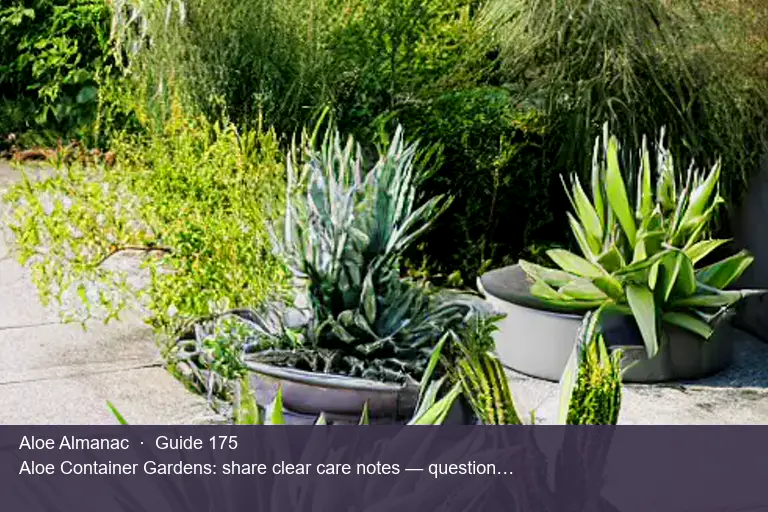
Aloe container gardens have become increasingly popular as an alternative to traditional outdoor containers. These gardens can be set up to suit various seasons, whether it's the warm summer months or the cold winter months. By following a few simple care tips, you can ensure your aloe container garden stays healthy and vibrant. Here are some practical tasks and steps to consider:
- Select the right size: Choose containers that are the right size for your aloe plants. The ideal size is between 10 and 15 inches in diameter, depending on the size of your plants. Make sure the containers are wide enough to accommodate the plant's roots. Use a potting mix that is appropriate for the plant and the soil conditions in your area.
- Water regularly: Water your aloe plants at least once every 7-10 days, depending on the season and the weather. Watering too frequently or too little can cause root rot. Check the soil moisture regularly, and water when the top inch of soil feels dry. Use a watering can or a watering bottle to water your plants. Be sure to avoid watering in the evening, as the heat can cause the leaves to rot.
- Fertilize regularly: Fertilize your aloe plants once every 2-3 weeks, using a balanced fertilizer. Apply the fertilizer at a depth of 2 inches in the soil. Be sure to use a fertilizer that is appropriate for the plant and the soil conditions in your area. Avoid using too much fertilizer, as it can lead to excessive growth and stress.
- Prune regularly: Prune your aloe plants as needed to keep them healthy and prevent disease. Remove any dead or diseased leaves, stems, or roots. Use sharp scissors or pruning shears to cut the plant. Be sure to prune in the spring, just before new growth begins.
- Provide support: Provide your aloe plants with support as needed. Use a stake or a trellis to support the plant. Be sure to use a sturdy stake or a trellis, as the plant can easily break if not supported. Make sure the stakes or trellis are wide enough to accommodate the plant's roots.
- Check for pests: Check your aloe plants regularly for pests, such as aphids or spider mites. Use a hand net or a fine spray to remove any pests from the plant. Be sure to remove any pests before they cause damage.
- Provide a shady spot: Provide your aloe plants with a shady spot to avoid sunburn. Use a sheltered location, such as a window shade or a patio. Be sure to use a shady spot, such as a window shade or a patio, to avoid sunburn.
- Provide a water source: Provide your aloe plants with a water source to avoid water waste. Use a water bottle or a watering can to water your plants. Be sure to use a water source to avoid water waste, use a water bottle or a watering can to water your plants.
- Provide a food source: Provide your aloe plants with a food source to avoid food waste. Use a food source, such as a food mix or a food supplement, to provide your plants with food. Be sure to use a food source, such as a food mix or a food supplement, to provide your plants with food.
- Provide a shelter: Provide your aloe plants with a shelter to avoid sunburn. Use a sheltered location, such as a window shade or a patio, to avoid sunburn.
By following these simple care tips, you can ensure your aloe container garden stays healthy and vibrant. As the seasons change, you may need to adjust your care schedule accordingly. Make sure to check your aloe plants regularly for pests, prune regularly, provide a water source, provide a food source, and provide a shelter.
Use this guide