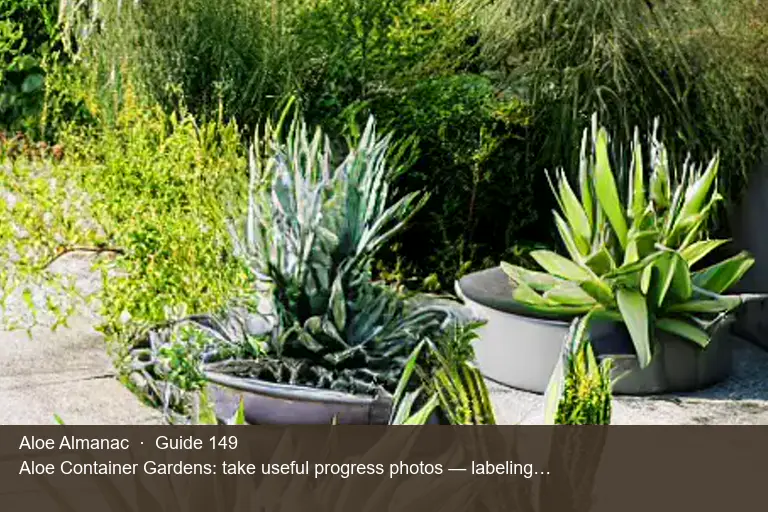
Aloe Container Gardens: take useful progress photos — labeling scheme for existing containers; setup at seasonal changeover
Aloe Container Gardens: Take Useful Progress Photos
As the seasons change, so do the landscape, and the garden too. This is especially true when it comes to the care and maintenance of aloe plants. Aloe is a popular choice for its soothing properties and its ability to rejuvenate and heal. However, these plants thrive in warm, moist environments, and regular watering and light is essential for their health. As such, regular photos are invaluable in the care of aloe plants, as they allow us to assess the health of the plants and make adjustments as needed. In this article, we will share some tips and guidelines for taking useful progress photos for aloe container gardens.
Firstly, it's important to label your photos. This is not just to ensure that you can quickly find photos later, but also to make sure that you don't accidentally label the wrong plant. Label each photo with the name of the plant, its size, the season, and the time of day. This will help you identify and locate the plants quickly, and will also make it easier to find the plants in the future if you need to. For example, if you notice that one of your aloe plants has grown too large, you can quickly locate it by looking at its label and knowing that it was planted in a 10-inch container. This will help you to save time and make sure you don't miss out on any growth.
Secondly, it's important to take photos at the seasonal changeover. This is especially important for aloe plants that are in a dormant period, such as during the winter months. At this time, aloe plants are in a state of dormancy, and their growth rate is slow. Therefore, it's essential to take photos at this time to ensure that the plants are not under stress and are still able to thrive. Taking photos at this time can also help you to identify any changes in the plant's growth and health. For example, if you notice that one of your aloe plants has not grown as fast as before, you can quickly locate it by looking at its label and knowing that it was planted in a 5-inch container. This will help you to identify any changes in the plant's growth and health and make adjustments as needed.
In conclusion, taking useful progress photos for aloe container gardens is essential for maintaining healthy aloe plants during the changing seasons. By labeling your photos, taking photos at the seasonal changeover, and understanding the importance of these plants in a warm, moist environment, you can ensure that you have aloe plants that are thriving and growing well. Remember, taking photos is just one part of the care and maintenance of aloe plants, but it's an essential part of the process.