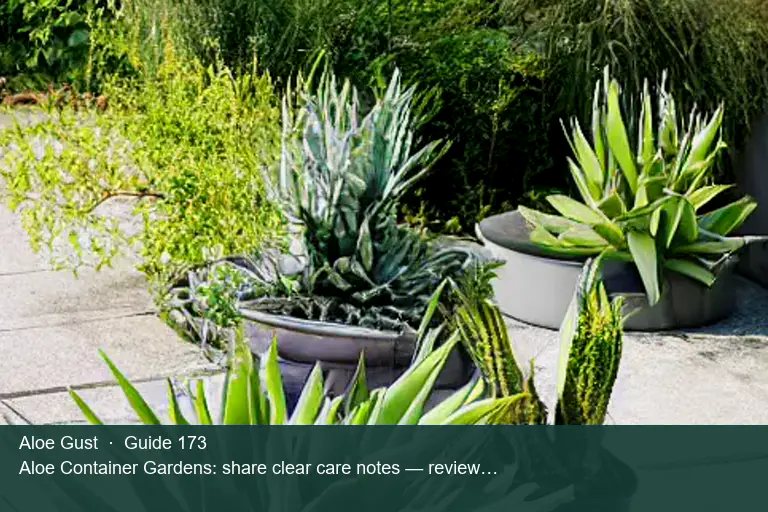
Aloe Container Gardens: share clear care notes — review calendar for incomplete plant labels; setup after a break
**Aloe Container Gardens: Share Clear Care Notes**
Aloe plants are beloved for their soothing, invigorating qualities. Whether you're a seasoned gardener or a beginner eager to incorporate aloe into your indoor landscape, the right care can make all the difference. This article will guide you through the setup and care of aloe container gardens, focusing on practical steps and care tips.
**Introduction**
Aloe plants are not just pretty; they're also invaluable for their calming effects and their ability to help reduce stress. However, just like any plant, aloe requires proper care to thrive. In this article, we'll share clear care notes for aloe container gardens, focusing on essential steps like soil type, watering, light needs, and pruning.
**Choosing the Right Soil**
Aloe loves soil that's rich in organic matter, rich in nutrients like potassium, calcium, and iron, as well as high in organic matter. The ideal soil should also be well-draining, not soggy. Use a good quality potting mix, or a mix that's specifically formulated for aloe plants.
**Selecting the Right Plants**
To ensure your aloe plants have the right conditions, select plants that are known for their aloe-like qualities. Some popular aloe types include the American Beauty, the Aloe Vera, and the Aloe Parapsychia. Always choose plants that are in good health, with no visible signs of pests or diseases.
**Watering Carefully**
Watering aloe requires a careful approach. It's best to water your plants when the top inch of soil is dry. Overwatering aloe can cause root rot, so be sure to water your plants when the soil is just moist. Aloe plants prefer a slightly dry, well-draining soil, so be sure to water your plants in the early morning to avoid water evaporation.
**Lighting**
Aloe plants require bright, indirect light, ideally in a sunny window. Avoid direct sunlight, as it can cause scorching and wilting. Aloe plants can also benefit from indirect light, which can help reduce stress and promote growth.
**Pruning Carefully**
Pruning aloe plants is crucial for maintaining their health and appearance. Remove dead, damaged, or diseased leaves and branches to encourage new growth. Prune in the late spring or early summer when the plants are dormant, to avoid damage to the roots.
**Maintenance and Troubleshooting**
Regular maintenance is essential to keep your aloe plants healthy. Check the soil regularly to ensure it's well-draining and that the plants are getting enough water. Prune as needed to maintain the plant's shape and health.
**Conclusion**
Incorporating aloe into your indoor garden can be a delightful and soothing experience. By following the care tips outlined in this article, you can help ensure your aloe plants thrive and create a beautiful, healthy garden. Remember, proper care is key to your plants' success.
**Stop Here:**
**Review the Calendar for Incomplete Plant Labels**
You may have noticed that your plant labels are incomplete. This is a common occurrence, especially with plants that require a lot of care. However, don't worry! There are still ways to keep track of your plants and ensure you're following the care instructions.
**Setting a Reminder**
Set a reminder on your phone or computer to review your plant labels every few weeks. This will help you catch any minor issues before they become major problems. You can also create a calendar on your phone or computer to keep track of your plants' needs and care schedule.
**Review the Labels Regularly**
Review your plant labels regularly.
Remember, proper care is key to your plants' success. Keep your plants' labels complete and make sure to review your plant labels regularly to catch any minor issues before they become major problems.