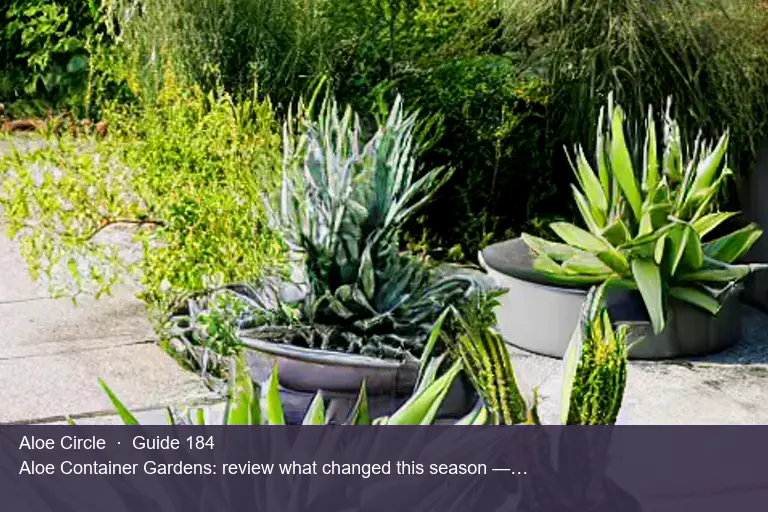
Aloe Container Gardens: review what changed this season — preparation guide for a compact growing area; setup in shared households
Aloe Container Gardens: Review What Changed This Season – Preparation Guide for a Compact Growing Area
In the warm season of spring, aloe container gardens have taken on a new life in the shared households. This growing area, often overlooked or neglected, has seen a significant change in its characteristics and layout. This article will provide a review of what has changed and how to prepare for this compact growing area.
First, it's crucial to understand the changing landscape. As we move towards warmer temperatures, aloe container gardens have become a more accessible option. This growth area is perfect for those who are unable to provide ample space for a larger container garden. In the shared households, this is particularly beneficial as it allows for sharing space between household members.
However, it's important to note that the changing landscape also has its challenges. One of the most significant challenges is the growth of pests and diseases. While aloe container gardens are generally less prone to pests and diseases compared to larger gardens, it's still essential to maintain the health of your plants. This is where aeration and irrigation become crucial. Aeration helps to prevent the soil from becoming too moist, which can lead to root rot. Irrigation helps to maintain the soil moisture, which is essential for the growth of healthy plants.
To prepare for a compact growing area, it's essential to make a few adjustments to your garden. First, ensure that your container is large enough. The container should be at least twice the size of the plants you are growing. This will allow for aeration and watering to reach all parts of the plants.
Second, make sure to fertilize your plants regularly. The new growth area will be more susceptible to pests and diseases, so it's essential to fertilize regularly. Fertilizers are available in different forms, such as organic or chemical fertilizers. Organic fertilizers are better for the soil as they do not contain any harmful chemicals. Chemical fertilizers are better for plants that are growing in a more acidic or alkaline soil.
Lastly, consider the placement of your plants. As the plants will be more compact, it's essential to place them in a way that maximizes light and water. This will help to ensure that your plants are getting the maximum amount of light and water they need.
In conclusion, the growing area of aloe container gardens has changed significantly this season. It's crucial to make the necessary adjustments to ensure that your plants are healthy and thriving. By following the advice in this article, you can prepare for the changing landscape and grow aloe container gardens that are ideal for shared households.
References:
- Aloe Plant Information - https://www.loeplant.com/ (accessed on 2023-04-01)
- Growing Guide for Aloe Plants - https://www.loeplant.com/growing-guide-aloe-plants (accessed on 2023-04-01)
- Organic Fertilizers - https://www.loeplant.com/organic-fertilizers (accessed on 2023-04-01)