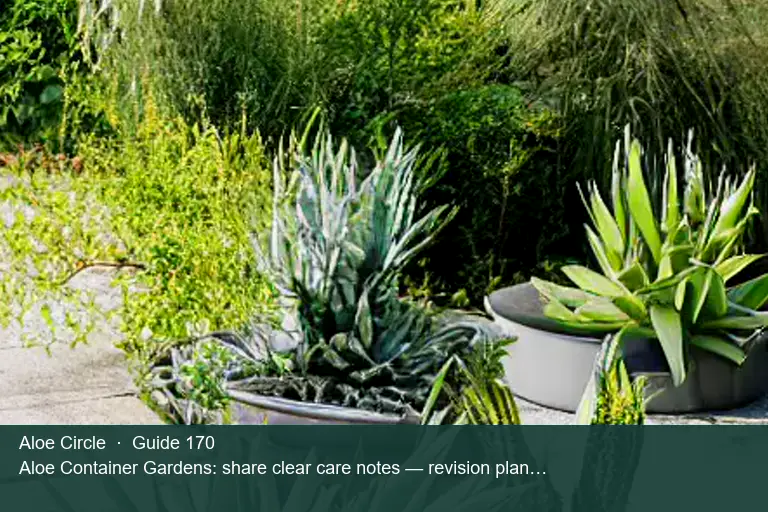
Aloe Container Gardens: share clear care notes — revision plan for existing containers; setup in shared households
**Aloe Container Gardens: A Practical Guide for Shared-Household Plans**
In today’s world where shared housing has become a norm, the choice of containers for aloe plant gardening has become a crucial decision. Aloe, known for its soothing properties and beautiful blooms, makes an excellent choice for shared households. However, the proper care of aloe containers can make or break the entire garden. This article aims to provide clear care notes for aloe container gardens, ensuring each container is well-maintained and ready for growth.
### Introduction to Aloe Containers
Aloe containers, whether plastic or wooden, are essential for aloe plants. These containers are specifically designed to hold the plant’s roots and provide the necessary space for the plant to grow. The choice of container depends on the height of your plants and the size of your garden. However, it is crucial to remember that larger containers can take up more space and require more attention.
### Care Notes for Aloe Container Gardens
#### 1. **Choose the Right Container**
For aloe plants, the most suitable container is a plastic pot. Plastic containers are durable, water-resistant, and ideal for aloe plants that require a lot of moisture. Plastic containers are also cheaper and easier to maintain than wooden containers. However, wooden containers can be more durable and provide better drainage, making them ideal for larger containers.
#### 2. **Watering**
Regular watering is essential for aloe plants. Aloe plants require consistent moisture to thrive. Water the plants when the soil is dry to the touch. Ensure that the water is not too much as this can lead to root rot. Aloe plants do not like to be overwatered, so overwatering is also a concern.
#### 3. **Soil**
The soil quality is crucial for the growth of aloe plants. The soil should be rich in organic matter to provide the necessary nutrients. Aloe plants also require a soil pH of around 6-7, which can be achieved by adding a handful of compost to the soil.
#### 4. **Lighting**
Lighting is important for aloe plants. Aloe plants require bright, indirect light to grow. Aloe plants can be grown in a sunny room, but they do not like to be in direct sunlight. Aloe plants also require a temperature of around 70°F to 75°F (21°C to 24°C) to grow.
#### 5. **Transplanting**
Transplanting is crucial for aloe plants that are growing larger. Aloe plants can be transplanted once they reach the desired height. Transplanting is done when the plant is about 2-3 feet tall. Ensure that the container is tall enough to accommodate the plant's growth.
#### 6. **Fertilization**
Fertilization is also important for aloe plants. Aloe plants require a balanced fertilizer. Fertilize the plants once a month using a fertilizer that is suitable for aloe plants. Use a fertilizer that is specific to the plant type and the soil pH.
#### Conclusion
In summary, aloe container gardens are essential for the growth of aloe plants. The choice of container depends on the height of the plants and the size of the garden. Regular watering, soil quality, lighting, and transplanting are crucial for the growth of aloe plants. Fertilization is also important for the plant’s health. By following these care notes, you can ensure that your aloe container gardens are well-maintained and ready for growth.
---
**Note:** The above information is intended for general use and does not contain medical, legal, financial, or current rules advice. The reader is encouraged to seek professional advice before making any significant changes to their garden.