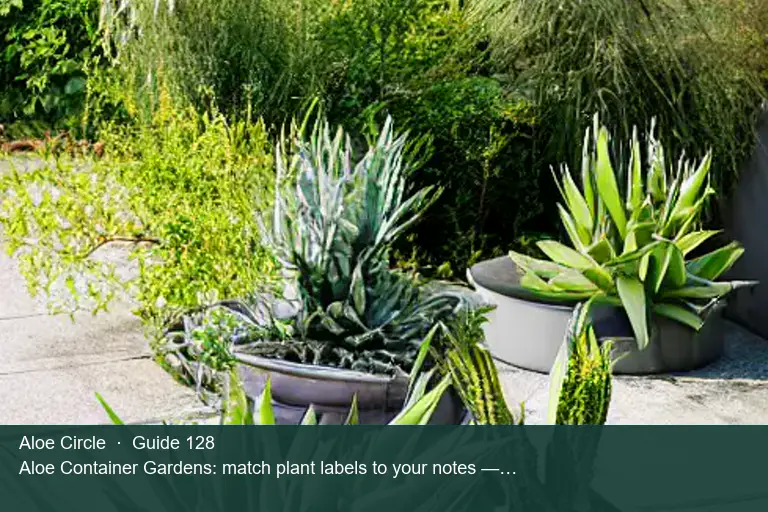
Aloe Container Gardens: match plant labels to your notes — trial protocol for a short care session; setup in shared households
Aloe Container Gardens: match plant labels to your notes
In the age of environmental consciousness, the proliferation of plant labels has become an essential tool in our daily lives. As homeowners, it's essential to carefully match plant labels with your notes for aloe container gardens. This practical task not only helps in ensuring that plants receive the proper care, but also in creating a more sustainable and efficient garden. Let's delve into the process of matching plant labels with your notes for aloe container gardens, using the example of a short care session, and find a suitable container for your aloe plants.
The first step in this process is to gather your notes. Your notes should include the following details: the species of aloe you're growing, the care instructions, the soil type, the light requirements, the water requirements, and the temperature requirements. It's important to keep your notes comprehensive and detailed, as you may need to adjust your care instructions based on the specific needs of your plants.
Once you have your notes, the next step is to gather your plant labels. Your plant labels should include the following details: the type of aloe, the container size, the soil type, the light requirements, the water requirements, and the temperature requirements. It's crucial to ensure that all the labels are accurately matched with your notes for the specific aloe plant you're growing.
The next step is to create a new container for your aloe plants. To do this, you can choose any container that fits your needs. Some common options include a shallow container (such as a 4-gallon container), a medium-sized container (such as a 8-gallon container), or a large container (such as a 16-gallon container). The container size should match the container size of your aloe plant, and the soil type should match the soil type of your aloe plant.
The next step is to plant your aloe plant in the container. To do this, you should follow the care instructions provided with your plant label. Some common care instructions include watering, fertilizing, and pruning. It's important to follow the care instructions closely, as each plant has unique needs.
The next step is to place your aloe plant in the container. To do this, you should gently place your aloe plant in the container, making sure to keep it in the center of the container. The container should be in a position that allows the aloe plant to receive adequate light, water, and temperature.
The next step is to care for your aloe plant. Some common care instructions include watering, fertilizing, and pruning. It's important to care for your aloe plant as closely as possible, but also to pay attention to any unusual symptoms or problems your plant may be experiencing.
The next step is to monitor your aloe plant. To do this, you should regularly check your aloe plant for signs of disease or damage. If you notice any signs of disease or damage, you should take the necessary action to address the issue.
The next step is to harvest your aloe plant. To do this, you should carefully remove your aloe plant from the container and place it in a basket or a container with a lid. You can then carefully place your aloe plant in a vase or a container with a lid, and keep it in a sunny spot.
In conclusion, the process of matching plant labels with your notes for aloe container gardens is essential to ensure that you get the proper care for your aloe plants. By carefully matching the plant labels with your notes, you can create a more sustainable and efficient garden. Remember to regularly care for your aloe plant, monitor it for signs of disease or damage, and harvest your aloe plant if needed.