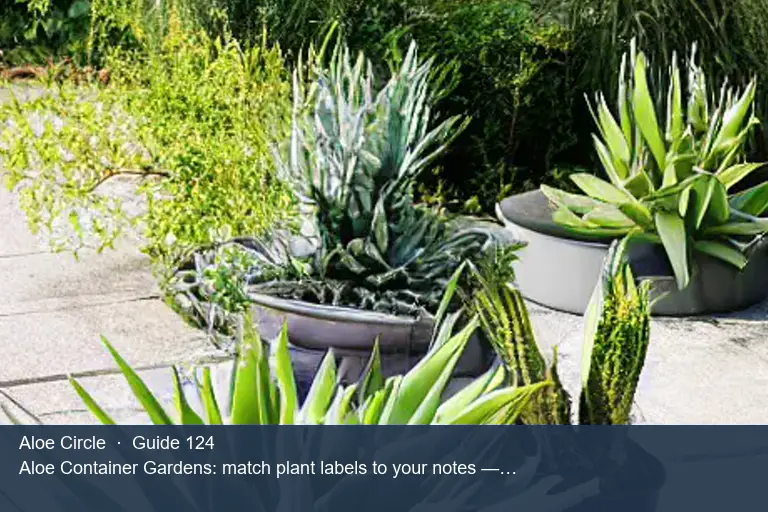
Aloe Container Gardens: match plant labels to your notes — step sequence for a compact growing area; setup in shared households
Aloe containers, often referred to as "aloe" or "aloe plant, " are popular for their unique shape and ability to thrive in various growing conditions. These containers can be used as a compact growing area, making them perfect for shared household plans. Below, I will guide you through a step sequence that will help you set up a successful aloe container garden in your shared household.
- Prepare the soil: The first step is to ensure your soil is well-draining and suitable for the plants you are growing. This can be achieved by mixing in compost or peat moss to improve soil quality. The ideal soil pH should be between 6.0 and 6.8.
- Choose the right aloe variety: Select aloe varieties that are suited for your growing conditions. Some popular aloe varieties include "Aloe Vera," "Aloe Saffron," and "Aloe Barbadensis," which are known for their medicinal properties and ability to thrive in various growing conditions.
- Choose the right potting mix: Potting mix should be a mix of peat moss, perlite, and a small amount of sand. The potting mix should be slightly larger than the roots of the plants you are growing.
- Determine the depth of the potting mix: The depth of the potting mix should be slightly larger than the root of the plants you are growing. For example, a 12-inch pot will hold 3 to 4 plants, while a 18-inch pot will hold 6 to 7 plants.
- Prepare the containers: Before you start planting, ensure your containers are clean and prepared for planting. This can be achieved by removing the old soil and replacing it with new potting mix.
- Plant the aloe plants: Once your containers are ready, you can start planting the aloe plants. Place the aloe plants in the containers, spacing them approximately 3 to 4 inches apart. Make sure the roots are in the soil, and the leaves are above the soil.
- Water the aloe plants: Water the aloe plants daily, depending on the temperature and the amount of rainfall you receive in your area. Water the plants with a watering can or a watering bottle, ensuring that the water is evenly distributed.
- Care for the aloe plants: Keep an eye on the aloe plants for any signs of disease or pests. If you notice any issues, take appropriate action to prevent them from spreading. For example, if a plant shows signs of yellowing leaves, make sure it receives more water and fertilize it with a fertilizer designed for aloe plants.
- Prune the aloe plants: Pruning is an essential step for aloe plants, as it helps them to remain healthy and provide the best possible growth. Prune the aloe plants to remove any dead or diseased branches.
- Harvest the aloe plants: After the aloe plants have been well-watered and pruned, it is time to harvest the plants. Remove the roots and dispose of any dead or diseased branches.
- Clean the aloe plants: After harvesting the aloe plants, it is essential to clean them to prevent any contamination. Use a soft cloth or a cleaning solution to clean the leaves, and then dry them thoroughly.
- Store the aloe plants: Finally, store the aloe plants in a dark, cool place. The ideal temperature for aloe plants is around 60°F (16°C). Store the plants in a plastic bag or a container with a lid to prevent moisture from getting in.
In summary, aloe container gardens can be a great way to grow plants in a compact growing area. By following the steps outlined in this article, you can ensure that your aloe plants are well-watered, pruned, cared for, harvested, and stored. As you continue to grow your aloe plant containers, you will find that they provide a unique and healthy growing environment for your plants.