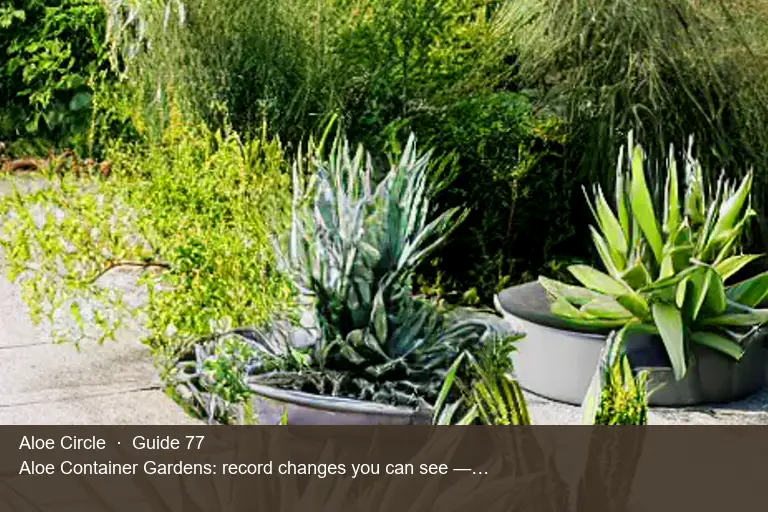
Aloe Container Gardens: record changes you can see — troubleshooting map for a temporary work area; setup in shared households
Aloe Container Gardens: The Record Changes You Can See
In the realm of gardening, containers have become indispensable tools, allowing us to grow plants without the need for soil or direct sunlight. With aloe container gardens, the potential for record changes is immense, as they can transform the way we think about plant cultivation. This article aims to help you record changes you can see, providing a practical guide for aloe container gardens. In the shared household plans, the scope is to enable shared households, ensuring that everyone can contribute to the gardening process, thus promoting a sense of community and unity.
Step 1: Understanding the Potential Record Changes
The potential for record changes in aloe container gardens is vast, as these containers can accommodate a wide variety of plants. From small succulents to large trees, containers can accommodate a wide range of plants, making them an ideal choice for growing a diverse array of plants. The potential for record changes lies in the ability to grow plants that require minimal space and do not compete with other plants. Containers can also be used to grow plants that require more space or do not compete with other plants, such as herbs and container roses.
Step 2: Setting Up Your Containers
Setting up your containers requires some planning and care. First, choose the right size and shape of container. For small plants, a container with a diameter of 20-30 cm is ideal. For large plants, a container with a diameter of 50-70 cm is recommended. Next, choose the right type of soil. For small plants, a clay or perlite soil is suitable. For large plants, a better-quality soil may be required. Finally, choose the right planters. For small plants, a wooden or plastic container is suitable. For large plants, a metal or ceramic container is recommended.
Step 3: The Process of Growing aloe Container Gardens
The process of growing aloe container gardens involves several steps. First, prepare the soil. Next, choose the right container. Next, plant the seedlings or seedlings. Next, water the plants. Next, fertilize the plants. Finally, monitor the plants and make adjustments as necessary.
Step 4: Troubleshooting the Record Changes You Can See
The potential record changes in aloe container gardens can be attributed to several factors, such as the choice of plants, the container size and shape, the type of soil, the planters, and the watering and fertilizing methods. To troubleshoot the record changes, it is essential to ensure that the plants are growing healthily, the soil is well-draining, the plants are getting enough water and nutrients, and the planters are well-maintained. By addressing these factors, you can ensure that the record changes can be corrected or minimized, allowing you to continue growing aloe container gardens.
Conclusion
In conclusion, aloe container gardens can provide a record of changes you can see, enabling you to make adjustments to your gardening process. With proper planning and care, you can grow a diverse array of plants that require minimal space and do not compete with other plants. In the shared household plans, the scope is to enable shared households, promoting a sense of community and unity. By following the steps outlined in this article, you can record and troubleshoot the potential record changes in your aloe container gardens, ensuring that you continue to grow plants that require minimal space and do not compete with other plants.