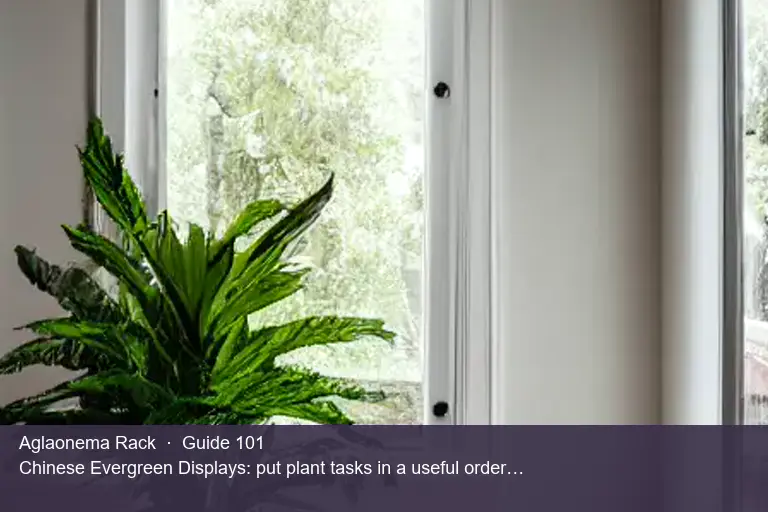
Chinese Evergreen Displays: put plant tasks in a useful order — planning worksheet for a first plant setup; setup for independent projects
**Chinese Evergreen Displays: A Practical Guide for First-Time Planters**
Evergreen displays are a fascinating choice for those looking to add a touch of nature to their living spaces. Among the options, Chinese evergreen displays stand out due to their unique blend of traditional and modern aesthetics. These displays are designed to both beautify and entertain, making them a popular choice for both indoor and outdoor settings. In this article, we'll take a closer look at how to effectively put plant tasks into a useful order for Chinese evergreen displays, using a practical guide that's perfect for first-time planters.
**1. Understanding the Chinese Evergreen Display**
First, it's essential to understand what a Chinese evergreen display is. These displays are made using a combination of materials, including bamboo, wood, and other natural materials. The leaves of these displays are often painted in a variety of colors, with the primary colors being green (often the most common color) and blue. The leaves themselves are typically ornamental and can be used to create a variety of shapes and patterns. These displays are perfect for those looking to add a touch of nature to their living spaces, whether it's for personal or communal use.
**2. Choosing the Right Evergreen Display**
Once you've decided on the type of Chinese evergreen display, the next step is to choose the right materials. Bamboo is a great choice for Chinese evergreen displays as it is durable and can withstand the elements. Wood is also a good option, as it can be used in a variety of shapes and sizes. Other natural materials like bamboo and wood can be used to create unique shapes and patterns that complement the display.
**3. Planning Your Evergreen Display**
Now that you have the materials, the next step is to plan your evergreen display. This can be a bit tricky, as you'll need to think about how the display will fit into your living space and how it will be used. Consider the size of the display and how it will be placed. The size of the display can be adjusted based on the amount of space available, while the placement of the display can be adjusted to fit into the layout of your living space. Think about how the display will be used and how it will be displayed, such as on a wall or in a corner.
**4. Setting Up Your Evergreen Display**
Once you've planned your evergreen display, it's time to set it up. This can be a bit of a challenge, as you'll need to think about how you'll hang the display and how you'll attach the leaves to it. Consider the placement of the display and the natural materials you'll be using. This can be as simple as hanging the leaves on a vertical support or using a mounting bracket to attach the leaves to the display. You can also consider how you'll attach the leaves to the display, such as using a loop or a clip.
**5. Putting Your Evergreen Display into Use**
Finally, put your evergreen display into use. This can be a bit of a challenge, as you'll need to think about how you'll use the display and how it will be displayed. Consider the size of the display and the shape of the leaves you'll be using. This can be as simple as placing the display on a wall or in a corner, or as complex as creating a display that can be displayed on a wall or in a corner. Consider the placement of the display and how it will be displayed, such as on a wall or in a corner.
**Conclusion**
In conclusion, putting plant tasks in a useful order for Chinese evergreen displays can be a challenging but rewarding experience. By following the practical steps outlined in this article, you can create a display that not only beautifies your living space but also adds a touch of nature to your daily routine. Remember, the key to a successful Chinese evergreen display is to think about how the display will fit into your living space and how it will be used, so you can create a display that is both practical and beautiful.